

Share with:


Espresso, cappuccino, macchiato, latte, mocha - they're all popular choices for a caffeine boost. While many businesses invest time and money in the search for top-of-the-line commercial coffee machines, the right commercial coffee grinder is equally crucial; a quality grinder is essential for a premium coffee experience, and our guide will help you choose the right one.
Choosing the Best Professional Coffee Grinders: Stepped vs. Stepless
Grinders allow users to adjust the grind coarseness, which varies depending on the coffee type (e.g. coarser for French press and finer for espresso). The stepped and stepless feature describes the method used to set the coarseness of the grind.
Stepped Grinders
Stepped coffee grinders feature preset coarseness levels that can be easily adjusted with a dial. Once the dial is pointed at the desired setting, the grounds will be produced to the optimum coarseness through the stepped process. While some may find the single dial setting limiting, some grinders will offer up to forty settings.
Stepless Grinders
Stepless coffee grinders rely heavily on the user's skill and judgment for grind coarseness. The control handle has a fluid motion that is set by hand therefore there are no preset coarseness levels and the quality of the grounds is solely dependent on the user’s personal judgement.
Stepless grinders give an independence to the business as they are not limited by factory settings, however unless the user has a good knowledge of the machine and the desired coarseness of the grounds, the end result may be hard to achieve. They offer more flexibility but require expertise.

Your choice depends on your needs, menu, and staff experience.
Coffee Grinders With or Without Dosing Compartments
Another aspect that must be looked into when purchasing your coffee grinder is the way in which the dose of coffee beans is measured into the machine. Grinders will fall into one of two categories; those with dosing compartments or those without. Dosing compartments can be useful and are a good time saving tool in busy coffee shops, however when using various different varieties of coffee beans you may find that a doserless model is better suited.
Dosing Compartment Grinders
Coffee grinders with dosing compartments store a quantity of grounds and dispense a measured dose into the filter. They also catch stray grounds for less waste and a cleaner work area. However, pre-grinding in large quantities can diminish freshness if coffee is not used and left to sit in the doser indefinitely. To make a superior espresso you should only use freshly ground coffee that has not been left to rest in a dosing compartment.
Doserless Coffee Grinders
Coffee grinders without dosing compartments dispense grounds directly into the filter, ensuring freshness but potentially creating more mess and requiring more time.
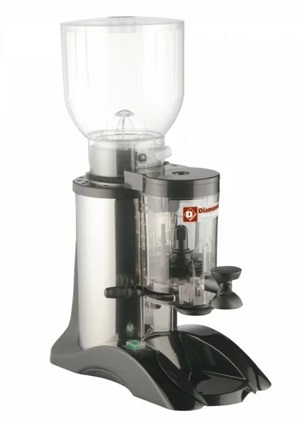
Blade vs. Burr Grinders
The last area to consider is the method the grinder uses to grind the beans.
Burr Grinders
Burr coffee grinders, also known as burr mills, use two abrasive surfaces (burrs or disks) to grind beans. The surfaces are adjustable depending on the level of fineness of coffee you need. The closer they are together during the grinding process, the finer your coffee will be. They feature teeth which chew through the beans when rotated, offering a consistent grinding and better flavour extraction. This makes them ideal for commercial use.
Burr grinders come in conical or flat burr varieties. Conical burrs tend to be larger and spin more slowly, generating less heat. Flat burrs, as seen in the Crem Pulse coffee grinder range, rotate at a quicker pace which leads to more heat generation, however are thought to offer more consistent grinding.
Burr grinders can either be operated by hand or by electricity. Hand operated burr grinders are costlier than their electric counterparts based on their aesthetic appeal.

Top Tip: Avoid over-grinding, as burrs can heat up and burn the grounds, leading to bitterness.
Blade Grinders
Blade coffee grinders, sometimes referred to as propeller grinders, use a rotating blade at the bottom of a grinding cavity. They produce less consistent results and are generally not suitable for professional use.
Buying a Commercial Coffee Grinder
If your business is serious about coffee, invest in a burr grinder. Choose a brand known for quality. Crem are leaders in commercial coffee machines and also offer excellent grinders, so you know your business will be in safe hands. Other brands to look out for are Diamond, Mazzer and Santos.
If noise of operation is a concern, silent coffee grinders are available. Timer functions are also handy to automate the grinding process and prevent overheating of coffee grounds. Always consider the size and capacity of the hopper in relation to the ferquency and number of cups your baristas are likely to serve.
Top Tip: Don’t scrimp when it comes to the budget for your commercial coffee bean grinder. You could have the best coffee machine but if the grinder doesn’t offer the same level of quality, your coffee menu will never reach its full potential. Read more here about what to look for when buying a commercial coffee machine.
Making the Most of Your Grinder
Coffee quality is paramount. Here are tips for maximising your grinder's performance:
- Clean Regularly - Remove stale oils.
- Invest in Quality - The grinder is as important as the machine.
- Training - Proper training is essential.
- Burr Type - Consider the pros and cons of conical vs. flat burrs.
- Grind Setting - Experiment to find the optimal grind for your coffee.
- Freshness - Grind beans just before brewing.
If your business is serious about coffee and insists on only serving quality coffees and espressos, then you must invest in the right coffee grinder for your needs. By assessing which elements are important to your beverage service you will ensure that the ideal investment is made and will also guarantee that you offer superior espresso with each and every serve.