
Share with:


Many catering and foodservice businesses wonder what the difference between a commercial microwave & a high speed oven is.
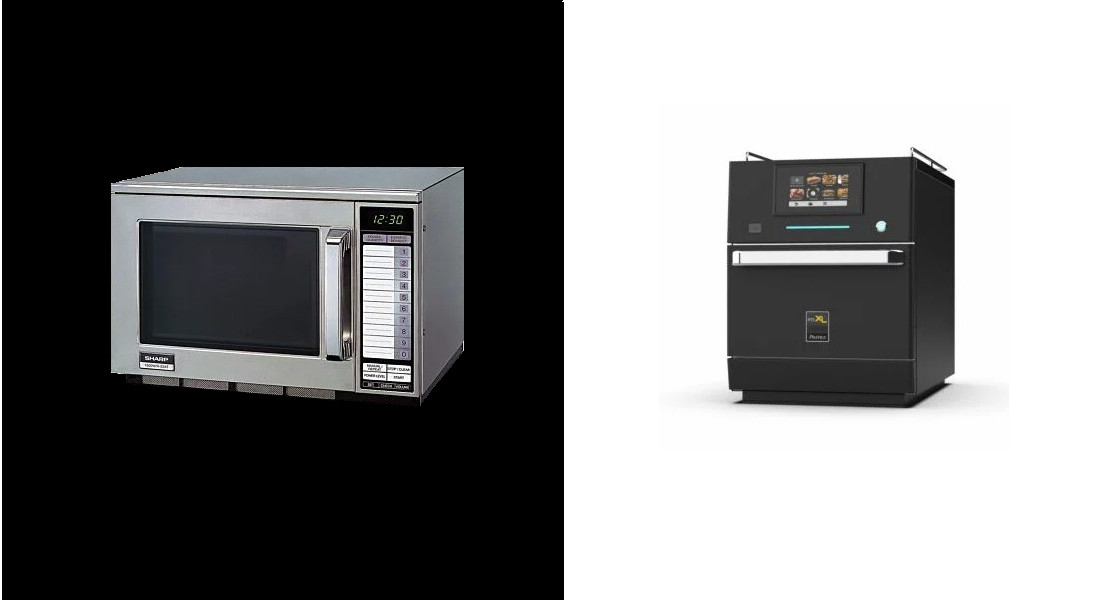
In broad terms, a commercial microwave (think of your home microwave but bigger and with more power) uses electromagnetic radiation to heat food. A high speed oven uses convection, microwaves and impingement technology, combining the speed of a microwave with the even cooking and browning of a traditional oven.
There are other differences - let's dive deeper.
What Is a Commercial Microwave?
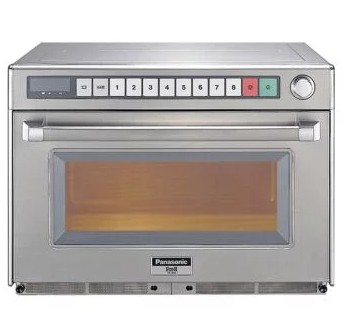
A commercial microwave is a cooking appliance designed for use in a public foodservice setting and uses electromagnetic cooking to heat food quickly and efficiently.
Catering microwaves are specifically engineered to withstand the heavy demands of a busy professional kitchen environment. They are equipped with powerful heating elements (generally about 2 magnetrons) and strong ventilation systems to handle continuous use and high-volume food preparation.
Commercial microwaves typically have larger interior capacities than domestic models, allowing for the quick heating of larger quantities of food at once.
What Is a High Speed Oven?
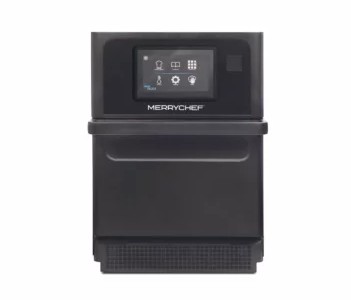
A high-speed oven, also known as a speed oven, accelerated cooking oven or rapid cook oven, combines multiple cooking technologies to cook food rapidly.
This versatile piece of kitchen equipment uses a combination of convection, microwave and hot air impingement to speed up the cooking process significantly. Microwave cooking heats food quickly from the inside out, convection cooking circulates hot air around the exterior of the food to cook from the outside and impingement technology directs superheated air at food to accelerate cooking and create a crisp finish. Some speed ovens also use infrared raditaion that also produces browning and crisping.
By combining advanced technologies, high-speed ovens are able to cook food anywhere up to 15-20 times faster than standard commercial ovens. This speed not only reduces cooking time but also helps in maintaining the food's moisture and flavour, resulting in better quality dishes.
Are there Similarities Between a Commercial Microwave Oven and a Speed Oven?
Both commercial heavy duty microwaves and high-speed ovens are highly efficient cooking appliances designed to meet the rapid cooking demands of a commercial setting. They both share the common goal of providing fast and consistent cooking results, making them critical tools in busy kitchens in their own way.
Industrial microwaves boast the advantage of quick reheating and defrosting, while high speed ovens offer accelerated cooking times without compromising on quality.
Their efficiency in terms of time and energy consumption makes them popular choices for kitchens that prioritise speed without compromising taste. Both catering appliances play a crucial role in enhancing productivity by reducing cooking times and allowing chefs to multitask effectively.
Commercial kitchen extraction isn't required when using restaurant microwaves and most speed ovens will have a ventless design which incorporates a catalytic converter to remove grease and smoke, so again, no need for separate extraction. Those that do not have a ventless system will require a commercial extraction canopy.
What Are the Differences Between Heavy Duty Microwaves and Rapid Cook Ovens?
The primary differences between a commercial microwaveand a high-speed oven lie in;
- cooking methods and technologies
- cooking speed
- size and capacity
- price
| Feature | Commercial Microwave Oven | High Speed Oven |
| Best For | Restaurants, fast food, canteens, cafeterias | Fast casual and quick service restaurants, bakeries, delis, coffee shops, high quality fast food and takeaways |
| Size | Compact, but larger than domestic models. Some models are GN compatible | Compact but larger than commercial microwaves. GN compatible |
| Capacity | Around 25 litres - 44 litres | 12 litres - 32.3 litres (not all manufacturers specify litres capacity, so this may be more) |
| Power | 1kW - 3.2kW. Standard 3 pin plug and single phase supplies | 2.7kW - 9.2kW. Standard power, high power and boosted power models available. Standard 3 pin plug, single phase and 3 phase supplies |
| Functions | Reheating, defrosting, basic cooking | Cooking, baking, browning, toasting, reheating |
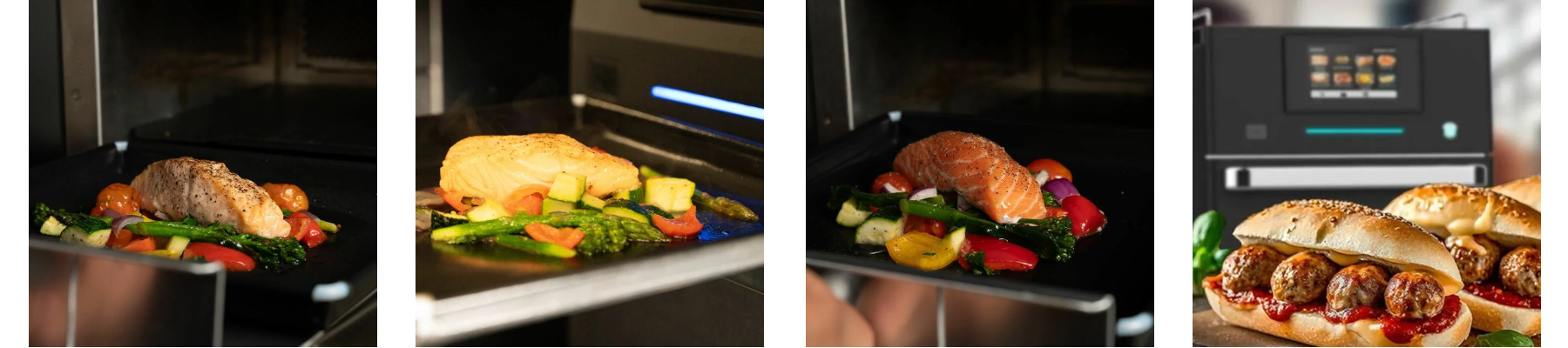
| Results | Good for specific foods, although may produce a 'soggy' finish for some dishes that should be browned and crispy and can result in dry, rubbery texture if food is heated for too long | High quality results with even cooking, good texture and perfect finish |
| Price | Low - £167 to £2,051 exc VAT | High - £2,450 to £10,479 exc VAT |
| Brands to Look Out For | Sharp, Panasonic | Lincat, Merrychef, Practica, Turbochef - Read more about the Best High Speed Ovens for Professionals |
Cooking Method
Commercial microwaves use electromagnetic heating to stimulate water molecules within the food, employing magnetrons to ensure even heat distribution and faster cooking. High-speed ovens combine impinged hot air technology, microwaves and convection, some also use infrared radiation, to achieve a greater range of cooking programs and finishes.
The Lincat Cibo+ range also uses a ContactBase system that produces crisp and perfectly coloured bases to food and 25% faster heat up of the oven cavity.

While commercial microwave ovens are known for their rapid cooking speed, reheating efficiency and defrosting ability, high-speed ovens offer a more versatile cooking experience with a combination of heating and cooking methods. This allows high-speed ovens to crisp and brown food surfaces effectively, similar to traditional ovens, while maintaining the convenience of accelerated cooking. The unique combination of heating and cooking methods in high-speed ovens results in faster cooking times and enhanced flavour development, making them ideal for busy commercial kitchens seeking top-quality results.
Cooking Speed
Both commercial microwaves and high-speed ovens are designed to produce rapid results.
Commercial microwaves use microwaves to heat food quickly and evenly by agitating water molecules within the food. These agitated molecules generate heat which then agitates the surrounding modules, the chain reaction continuing until the food is cooked. This results in rapid heating times. As the centre is cooked first and continues to cook until the outermost molecules are heated, microwaves can sometimes, depending on the food being heated, produce a dry centre while the outside is only just cooked. With a range of power outputs, medium duty and heavy duty microwaves are available to meet the needs of different size kitchen demands.
High-speed ovens combine microwave technology with convection and impinged hot air to cook food up to 20 times faster than conventional cooking in some models, cooking both from the interior and exterior simultaneously, making them a popular choice with professional chefs.
The efficiency of high-speed ovens lies in their ability to utilise various heating methods simultaneously, allowing for quick and thorough cooking. In commercial settings, where time is of the essence, rapid cook ovens are preferred for their speed and versatility in preparing a wide range of dishes.
Size and Capacity
In terms of size and capacity, commercial microwaves are typically smaller in size, while high-speed ovens offer larger overall dimensions. Both, however, are compact enough to sit on countertops. Microwaves are ideal as additional cooking equipment in large kitchens, although due to limited function, cannot entirely replace a conventional oven. Rapid cook ovens are highly desirable as an additional piece of equipment and could also be used as a sole cooking appliance in small kitchens limited by space.
Commercial microwaves excel in rapid heating and reheating tasks, while high-speed ovens can handle a wider range of cooking techniques and menu items for greater flexibility.
Price
nThe price of commercial microwaves is lower compared to high-speed ovens, making them a more budget-friendly option, however they don't offer the breadth of cooking capabilities and results that a speed oven can. The additional cost of an accelerated cooking oven reflects the advanced technologies that come as standard.
Should I Buy a Commercial Microwave or High Speed Oven?
Deciding between a commercial microwave and a high-speed oven depends on your specific cooking requirements, budget, and available space and capacity in your commercial kitchen.
- Consider your cooking needs, assess the types of tasks you frequently perform and how each appliance can meet those demands. For example, need to rapidly reheat or defrost food items like soups, stews, or frozen meals? A commercial microwave may be the most suitable choice. Baking delicate pastries, roasting meats, or need to achieve crispy textures? A high-speed oven will provide more precise control and superior results.
- If your business could use either piece of equipment, your budget is a crucial factor in the decision. It's important to weigh not just the initial purchase price, but also the long-term operating expenses. A commercial microwave may have a lower upfront cost, but its energy efficiency could be less optimal compared to a high-speed oven, leading to higher utility bills in the long run. Also bear in mind that more budget friendly equipment may not be built to the same quality in terms of materials and components, as higher priced models.
- For establishments with limited space but high demand for quick heating or reheating, a commercial microwave might be the ideal choice. Its smaller footprint allows for easy integration into crowded kitchen layouts without sacrificing basic functionality. The best high-speed ovens, with their larger dimensions and versatile cooking capabilities, are better suited for larger kitchens that handle a wider variety of menu items and require higher throughput.
* Prices based on time of publish