
Share with:


Post Contents []
- What is Included in the term Catering Stainless Steel Fabrications?
- Types, Properties & Benefits of Stainless Steel Used in Commercial Catering Fabrications
- Factors to Consider When Buying Stainless Steel Fabrications
- Size and Use
- Grade, Gauge, Strength and Durability
- Welded or Flat Packed
- Specific Kitchen Requirements
- How to Clean & Care For Stainless Steel Fabrications
- Trust the Manufacturer
From tables to sinks, shelving to racking, there are a variety of options to consider. In this buying guide, we explore the types, properties, and benefits of stainless steel used in commercial catering fabrications. We also discuss important factors to consider when purchasing these products, such as size, gauge, strength, and durability. Find tips on how to clean and care for your stainless steel fabrications and learn everything you need to know before making a purchase for your commercial catering kitchen.
What is Included in the term Catering Stainless Steel Fabrications?
Catering stainless steel fabrications encompass a wide range of essential kitchen components, all designed to meet the specific needs of commercial kitchens and food processing environments. These items are crucial for maintaining hygiene and durability in high-traffic areas.
Catering Tables
Stainless steel tables are a cornerstone of commercial kitchen setups, providing durable and hygienic surfaces for food preparation.
One of the key benefits of utilising a stainless steel catering table is the unparalleled durability, which ensures it can withstand the daily hustle and bustle of a busy kitchen environment without compromising their integrity.
The resistance of stainless steel catering tables to corrosion and rust makes them ideal for handling various food items without the risk of contamination, thereby maintaining a high standard of hygiene. Another advantage is the ease of cleaning these tables offer, saving valuable time and effort in maintaining a spotless work area.

Stainless Steel Sinks
Commercial sinks are essential in commercial kitchens for their exceptional cleaning efficiency and corrosion resistance.
Their durability and resistance to rust and corrosion make them stand out as the perfect choice for busy kitchen environments. These sinks not only offer a sleek and modern appearance but also ensure practicality and cleanliness. Stainless steel's non-porous surface prevents the growth of bacteria, making it hygienic and easy to maintain.
n addition, a catering stainless steel sink is highly versatile and can withstand high temperatures, heavy usage, and harsh cleaning chemicals without losing their shine or structural integrity. This durability translates into long-term cost savings for businesses, as these sinks require minimal maintenance and have a long lifespan.

Shelving & Racking
In regard to catering shelves, stainless steel offers robust storage solutions, tailored through custom fabrication processes to meet specific kitchen needs.
Stainless steel racking is integral to organising and storing equipment and supplies in commercial kitchens, valued for its durability and strength. As an essential component of kitchen storage solutions, stainless steel racking plays a crucial role in maintaining a tidy and functional workspace.
Its sturdy construction provides a reliable framework for holding heavy pots, pans, and ingredients, helping to optimise space usage efficiently.
The customisation options available with stainless steel catering shelving and racking allows for a flexible approach in designing storage solutions or supporting counters for light duty catering equipment.

Kitchen Extraction
Effective commercial kitchen extraction and ventilation systems made from stainless steel are crucial for maintaining air quality in commercial kitchens.
These systems play a vital role in removing smoke, grease, steam, and odours generated during cooking processes.
By efficiently extracting these airborne contaminants, stainless steel ventilation systems help prevent the accumulation of potentially harmful particles in the kitchen environment.
Not only does this enhance the overall air quality, but it also contributes to the safety of the kitchen staff by reducing the risk of respiratory issues caused by prolonged exposure to pollutants.

Grease Traps
Stainless steel grease traps are typically manual or passive traps. Designed to connect to sinks or other equipment where FOG (fats, oil and grease) can make its way into the main drainage system, grease traps intercept the dirty water, slowing it down and separating the FOG. The dirty water continues into public drains while the FOG remains in the trap.
Stainless steel is a common material for manual grease trap manufacture due to its durability and resistance to corrosion.

Types, Properties & Benefits of Stainless Steel Used in Commercial Catering Fabrications
The types of stainless steel commonly used in commercial catering fabrications include austenitic, ferritic, and martensitic stainless steels, each offering unique properties and benefits to enhance the performance and longevity of kitchen equipment. These types of metal are available in different grades; each more suited to different specific uses. Typically 316, 304 or 430 are used in commercial kitchens; each having a varying ratio and make-up of different metals. For more details on the difference between stainless steel gauges, grades and types take a look at our Introduction to Catering Stainless Steel.
Factors to Consider When Buying Stainless Steel Fabrications
When selecting stainless steel fabrications for commercial catering kitchens, it is essential to consider factors such as:
- Size
- Use
- Thickness
- Gauge
- Strength
- Whether the items are welded or flat packed
- Specific kitchen requirements
Size and Use
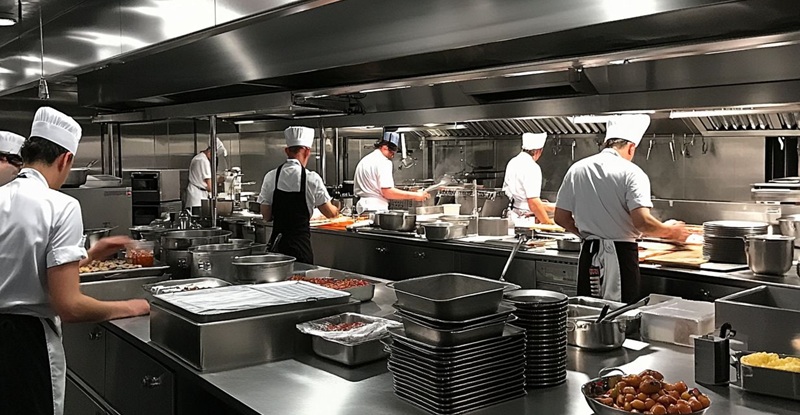
When considering the size and use of stainless steel fabrications, it is crucial to match the equipment to the specific needs of the commercial kitchen environment. Making the right choice can make a significant difference in the overall efficiency and functionality of the workspace.
Sizing for single units involves simply ensuring that equipment fits seamlessly into the designated areas, allowing for smooth operations and maximising the available space. Selecting oversized or undersized fabrications can lead to inefficiencies, clutter, and even safety hazards.
Correctly sizing fabrications for the intended use not only boosts productivity but also contributes to a safer and more organised kitchen layout.
If you're kitting out a new kitchen calculate the surface area you need and the amount of storage and food prep worktop you require before selecting equipment and fabrication sizes. Make sure there is sufficient space to operate in the kitchen, prepare foods, plate up, cook and plenty of valuable storage.
The intended use of the stainless steel may influence the suitability for different fabrications in terms of durability and resistance to corrosion. The versatility of stainless steel allows for customisation to meet the unique demands of various kitchen setups and operations.
When considering use in cases such as stainless steel tables, it's also critical to think about layout - whether you need centre tables with an unobstructed top or wall tables with an upstand. In terms of extraction, factor in the type, size and amount of cooking equipment that it must service, and in relation to sheving and racking, the amount of storage you need will determine the number of shelves.
Grade, Gauge, Strength and Durability
The grade, gauge, strength, and durability of stainless steel are critical factors that determine the longevity and reliability of catering fabrications.
Equipment will commonly be manufactured using 304 grade stainless steel that contains chromium and nickel for strength, easy cleaning and sanitisation and resistance against corrosion. 316 grade, highly resistant to corrosion caused by acids and 430 grade which is tolerant of acidic food and resistant to oxidisation are also used.
Stainless steel is available in various gauges, which refer to the thickness of the metal. Thicker gauges, such as 16 (approx. 1.6mm thick) or 18 (approx. 1.2mm thick), offer increased strength and resistance to dents and warping, making them ideal for most applications in busy kitchens. Where more heavier duty use is required, 14 gauge (approx. 2.11mm thick) may even be used. These thicker gauges are commonly used for equipment like worktables, sinks, and shelving units.
Thinner gauges, such as 20 (approx. 0.9mm thick) or 22 (approx. 0.7mm thick), are more lightweight and cost-effective. While they may not be as robust as thicker gauges, they are suitable for items like backsplashes, equipment panels, and other non-structural components.
Some equipment may be made using a combination of gauges - thicker gauges for the main frame and thinner gauges for any accessories or additional features.
Welded or Flat Packed
Choosing between welded and flat packed stainless steel fabrications depends on the specific needs and constraints of the kitchen setup.
Welded stainless steel fabrications offer superior strength and durability due to the permanent bonding of the metal pieces during manufacturing. This results in a more stable and robust structure, ideal for heavy-duty use in busy commercial kitchens where high temperatures and heavy loads are common.
Flat-pack stainless steel fabrications come with the advantage of easier transportation and storage, making them a more flexible option for locations with limited access or space restrictions.
Depending on the item, some fabrications may offer the option of flat pack for self assembly or fully welded and pre-built. Some equipment may only be available as one or the other.
Specific Kitchen Requirements
Do you need any special features from your fabrications, such as reinforced structure, additional shelves or drawers? This may narrow the fabrications options available to you.
How to Clean & Care For Stainless Steel Fabrications
Proper cleaning and maintenance of stainless steel fabrications are vital to preserving their appearance, functionality, and hygiene in commercial kitchens.
Regular upkeep of stainless steel equipment not only maintains a professional and pristine look but also prevents the build-up of bacteria and contaminants that could affect food safety.

Keep a microfibre cloth handy to clean your stainless steel work surfaces, including worktops, sinks, and shelves. Mild dish soaps, glass cleaning liquids, and cleansers can be used for cleaning purposes as they do not react with the surface and help you clean with ease.
Remember to rinse and wipe off any type of cleaner that you use on the stainless steel worktops and buff them well until they're dry to avoid any formation of bubbles, water spots or streaking on the surfaces.

Avoid harsh chemicals and abrasive materials that could damage the stainless steel finish.
How To Remove Scratches From Stainless Steel Worktops
Scratches are inevitable in a busy kitchen environment. To keep your stainless steel worktops and catering tables as sleek and good as new, consider these tips to take care of the scratches:
- For minor or small scratches, a non-abrasive stainless steel compound or items like baking soda and non-gel-based toothpaste can be used. Use a microfiber cloth to apply it to the surface and gently wipe it off in the direction of the grain. Voila! The scratches are gone.
- For tougher scratches, rubbing with super-fine sandpaper combined with stainless steel polishing compounds should do the job. Ensure that you do not use this method on a coated stainless steel worktop. If your stainless steel worktop is coated, use olive oil and gently rub, or refer to the user manual for instructions.
Trust the Manufacturer
Manufacturers of stainless steel catering fabrications have done most of the hard work for you by investigating the best type of stainless steel for the intended use of the equipment and ensuring that safety standards and food hygiene regulations are met. Be assured that any stainless steel fabrication will be up to the job, and unlike catering cooking equipment where advanced features and technology differ between brands, the basic qualities of stainless steel will remain unchanged between different units.